
Things to Know Before Visiting Poland for the First Time (2026 Guide)
Planning your first trip to Poland?
You might be wondering what to expect — from prices and transportation to safety and local culture.
Poland is one of Europe’s most surprising travel destinations. Many visitors arrive with modest expectations and leave wondering why they hadn’t visited sooner.
Here are the most important things to know before visiting Poland for the first time.
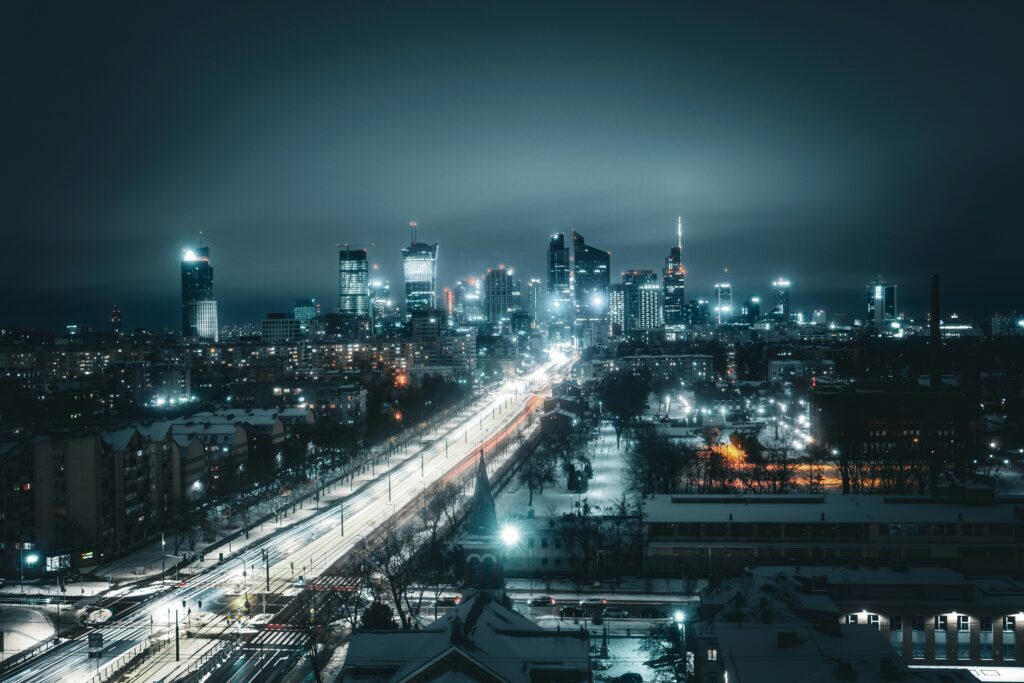
Poland Is Much More Modern Than Many People Expect
For many years Poland remained slightly outside the main European tourist routes. While countries like France, Italy or Spain attracted millions of visitors every year, Poland was still often associated with its Cold War past and life behind the Iron Curtain.
But today the country looks very different.
Poland has experienced one of the fastest economic growth rates in Europe over the past decades. As of 2026, Poland ranks around 20th in the world by nominal GDP, with its economy exceeding the symbolic $1 trillion mark. It is now the largest economy in Central Europe and an increasingly important regional power.
Modern infrastructure, dynamic cities, excellent internet connectivity and a highly developed digital payment system make traveling in Poland surprisingly convenient.
This rapid transformation has also started attracting international attention. Recently Warsaw was ranked second in The New York Times “52 Places to Go in 2026”, one of the most prestigious global travel lists.
Which means one thing: Poland may not remain Europe’s hidden gem for long.
Before that happens, here are some practical things every traveler should know.
Money, Prices and Budget
You Can Pay by Card Almost Everywhere
One of the things that surprises visitors most is how advanced electronic payments are in Poland.
You can pay by card in almost every place — from restaurants and museums to small cafés and local shops. Contactless payments are extremely common and widely accepted.
Major cards such as Visa and Mastercard work everywhere. American Express is not widely accepted.
Mobile payments like Apple Pay and Google Pay are also very popular.
Poland also has its own payment system called BLIK, which allows people to pay using a short code generated in their banking app. It has become so successful that the technology has recently been exported internationally, including to the United Arab Emirates.
If you prefer cash, ATMs are widely available across the country. Some machines may charge a withdrawal fee and often limit single withdrawals even to around 800 PLN, depending on the operator.
Poland Uses the Polish Złoty (Not the Euro)
Even though Poland has been part of the European Union for more than 20 years, the country still uses its own currency: the Polish złoty (PLN).
1 złoty is divided into 100 groszy.
Coins exist in denominations of:
1 gr, 2 gr, 5 gr, 10 gr, 20 gr, 50 gr, 1 zł, 2 zł and 5 zł.
Banknotes include:
10 zł, 20 zł, 50 zł, 100 zł, 200 zł and 500 zł (the 500 zł banknote exists but is almost never used in everyday transactions).
As of early 2026 approximate exchange rates are:
- 1 EUR ≈ 4.27 PLN
- 1 USD ≈ 3.71 PLN
Currency exchange offices (called kantor) are common in cities and usually offer good rates. However, just like anywhere else in the world, airport exchange offices tend to have worse rates, so it’s better to avoid them.
Sunday Shopping in Poland
One thing that may surprise visitors is that most large stores and supermarkets in Poland are closed on Sundays due to national trading regulations.
Smaller convenience stores, bakeries, cafés and restaurants usually remain open, and train stations or airport shops also operate normally.
If you plan to buy groceries or do bigger shopping, it is best to do it on Friday or Saturday.
Many visitors treat Sunday in Poland as a slower day — perfect for walking around the city, visiting cafés or exploring museums.
Poland Is Still Affordable Compared to Western Europe
For many Western travelers, Poland remains a relatively affordable destination.
Prices have increased in recent years, but compared with countries like France, Germany or Italy, everyday costs are still noticeably lower.
A typical restaurant meal with a drink usually costs around $10–$20 per person.
Drinks often make up a significant part of the bill. Unlike in some countries, restaurants in Poland usually do not automatically serve free tap water, so bottled water is typically ordered instead.
Typical drink prices:
- bottled water – about $3
- soft drink or juice – around $4
- coffee or tea – about $4–5
Tipping culture is also different from the United States. Tips are not mandatory, but if you are satisfied with the service it is common to leave around 10%.
Accommodation is also relatively affordable.
A luxury hotel in central Warsaw with a view of the famous Palace of Culture and Science may cost around $200–250 per night.
In cities like Krakow, Wroclaw or Gdansk you can often find excellent 5-star hotels in historic city centers for around $150–200 per night.
Transportation is also inexpensive.
For example:
- taxi from Wrocław airport to the city center – around $20
- public transport ticket – about $1–1.5
- intercity train between major cities – around $30–40
Getting Around Poland
Public Transport in Poland Is Very Good (And Cheap)
Public transportation in Poland is efficient, clean and widely used by locals. Most cities offer extensive networks of buses and trams, and Warsaw also has a metro system.
Tickets are inexpensive and available in machines at stops, inside vehicles or via mobile apps. Visitors can also purchase 24-hour, 48-hour or 72-hour passes, which are often the most convenient option. The cost is usually around $10–15 depending on the city.
To navigate the system you can use:
- Google Maps
- Jakdojade (a very popular Polish public transport app)
For travel between cities, you can use:
Both allow online ticket purchases.
If you want to understand exactly how train travel in Poland works — from buying tickets to navigating stations — you can read our full step-by-step guide here.
Distances Between Cities Are Manageable
Poland may look large on the map, but distances between major cities are actually quite manageable.
The country is less than 700 km (435 miles) from east to west and 650 km (around 400 miles) from north to south.
Examples of travel distances:
- Warsaw – Kraków: about 300 km / 186 miles (around 3 hours)
- Warsaw – Wrocław: about 350 km / 217 miles (3.5 hours)
- Kraków – Gdańsk: about 600 km / 373 miles (6 hours)
Thanks to modern highways and fast trains, traveling across the country is relatively easy.
This means that during one trip you can experience historic cities, mountains and the Baltic coast without extremely long travel times.
Polish Cities Are Very Walkable
Many Polish cities are very pedestrian-friendly.
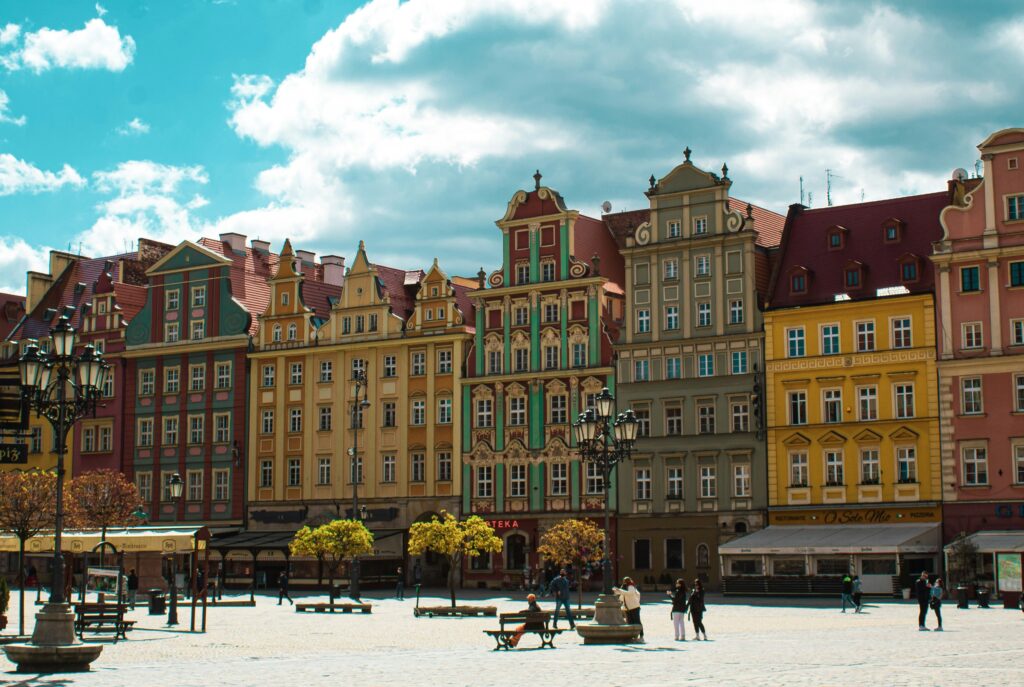
Historic centers often include large car-free zones, especially around old towns and main squares. Streets are well maintained and sidewalks are wide, making it easy to explore cities on foot.
Parking in historic districts can be limited, so walking or using public transport is often the best option.
In many cities you will also find bike-sharing systems and electric scooters, which are widely used by locals and tourists alike.
Language, Safety and Everyday Travel
Poland Is One of the Safest Countries in Europe
Safety is another factor that frequently surprises visitors.
Poland is widely considered one of the safest countries in Europe for tourists. Crime rates are relatively low, and city centers are generally safe even in the evening.
Public transport is also clean and safe to use, including at night.
You can read more about safety in Poland in our full guide about whether Poland is safe for tourists.
English Is Widely Spoken in Cities
If you are wondering whether you will be able to communicate in English, the answer is usually yes.
English is taught in Polish schools from an early age, and younger generations speak it quite well. In large cities — especially in restaurants, hotels, museums and tourist attractions — you should have no trouble communicating or finding a tour guide in English.
Among older generations English may be less common, but translation apps like Google Translate can easily solve that.
Still, learning a few basic Polish words is always appreciated.
Simple phrases like:
- Dzień dobry (pronounce Jeyn doh-bry)– hello / good morning
- Dziękuję (pronounce Jen-koo-yeh) – thank you
- Proszę (pronounce pro-sheh)– please
will almost always bring a smile.
Food and Culture
Polish Food Is Much More Than Pierogi
Polish cuisine is often associated with pierogi — and while they are delicious, there is much more to discover.
Traditional Polish cuisine uses a lot of vegetables, grains and meats. Soups are especially popular and come in many varieties.
Some dishes you should try include:
- pierogi – dumplings with various fillings
- żurek – sour rye soup
- bigos – slow-cooked cabbage and meat stew
- schabowy – breaded pork cutlet
Poland is also famous for its desserts, such as:
- apple pie (szarlotka)
- cheesecake (sernik)
- gingerbread (pierniki)
Regional specialties are also worth trying. In the mountains you can taste oscypek, a traditional smoked sheep cheese, while near the Baltic Sea fresh fish like cod and herring are common.
In recent years Polish cities have also developed a vibrant modern food scene with creative restaurants and international cuisine.
Poland also has a growing street food scene, with dishes like zapiekanka, kebab and food markets becoming increasingly popular in large cities.
And one more thing — restaurant portions can be quite large.
Polish Culture and History
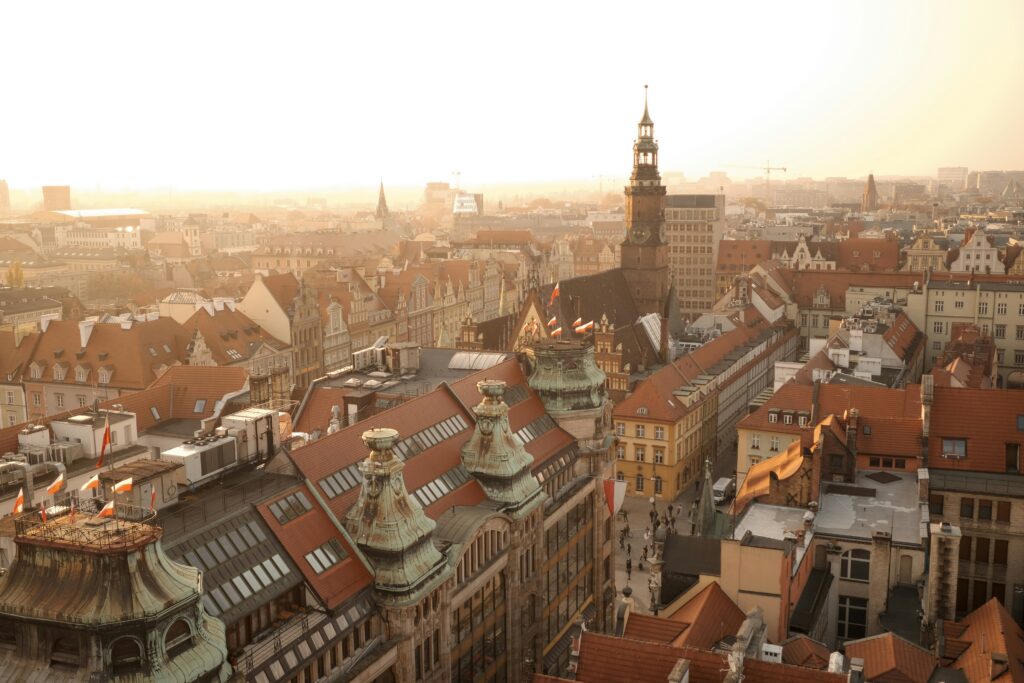
Poland has more than 1,000 years of history, so it offers plenty of cultural landmarks for visitors interested in architecture, museums and historic cities.
Some of the most famous places include Kraków’s Old Town and Wawel Castle, the Wieliczka Salt Mine (a UNESCO World Heritage Site since 1978), the impressive Malbork Castle, and the historic streets of Gdańsk on the Baltic coast. Other popular destinations include the medieval Old Town of Toruń, the beautiful market square in Wrocław, and the Auschwitz-Birkenau Memorial and Museum, one of the most important historical sites in Europe.
Polish culture is also strongly shaped by tradition, family life and hospitality. Visitors often notice how welcoming Polish people are and how important shared meals and family gatherings remain in everyday life.
Religion also plays an important cultural role, which is why many cities are filled with beautiful historic churches that are worth visiting even during a casual walk through the city.
And if you prefer nature, Poland also offers long Baltic beaches, national parks and the Tatra Mountains near Zakopane, the country’s most famous mountain region.
Best Time to Visit Poland
The best time to visit Poland is usually spring and summer, when cities are full of greenery and outdoor cafés. This is when most travelers explore Poland’s historic cities, national parks and Baltic Sea coast.
Summer temperatures typically reach 25–30°C (77–86°F).
Autumn can also be beautiful, especially in historic cities and national parks.
Winter is colder, with temperatures often between -10°C and 0°C (14–32°F), but it has its own charm. Christmas markets, snow-covered mountains and cozy restaurants make it a magical time to visit.
And unlike some Western European destinations, Poland remains far less crowded with tourists.
Is Poland Worth Visiting?
Absolutely.
Poland offers a unique combination of history, culture, modern cities, beautiful nature and great food — all at prices that remain reasonable compared to much of Western Europe.
Many travelers arrive with few expectations and leave pleasantly surprised.
If you are planning your first trip to Europe, Poland may easily become one of the highlights.
FAQ About Visiting Poland
Is Poland safe for tourists?
Yes. Poland is considered one of the safest countries in Europe for travelers.
Is Poland expensive to visit?
Compared to Western Europe, Poland is still relatively affordable.
Do people speak English in Poland?
Yes, especially in larger cities and tourist areas.
What currency is used in Poland?
Poland uses the Polish złoty (PLN), not the euro.
How many days do you need in Poland?
For a first visit, 5–10 days is usually enough to explore several cities and experience the country.


You May Also Like