

Best 7-Day Poland Itinerary for First-Time Visitors (2026)
Poland hasn’t always been at the top of travelers’ lists — but that’s starting to change. In fact, The New York Times recently ranked Warsaw as one of the top places to visit in 2026.
Maybe for you, Poland is just a stop between Berlin, Prague and Vienna. But the truth is — it has everything you’re looking for in a great travel destination: safety, good value, friendly people, easy transport, and still relatively few crowds. If you have even a week, it’s absolutely worth coming here.
That said — 7 days is not enough to see everything. Poland might look compact on the map, but it’s surprisingly diverse. You’ll find history, culture, nature, and great food — often all within a single trip.
But if you don’t want your first visit to feel like a rushed checklist, you need to be smart about how you plan it. Don’t try to see everything — it won’t work. Instead, choose a simple, realistic route that lets you actually experience the country.
Because once you do… chances are, you’ll want to come back for more.
7-Day Poland Itinerary (Quick Overview)
Most people underestimate how much time they lose on travel days — that’s why this itinerary keeps things simple and avoids unnecessary moving around.
That’s also why we’re focusing on just two cities that will give you a real understanding of Poland:
Warsaw — the capital, and Krakow — the former royal city and one of the most popular destinations for international visitors. And not without a reason.
Warsaw is worth seeing — but Krakow is where most travelers fall in love with Poland.
If you prefer bigger cities or more modern vibes, you could easily spend an extra day in Warsaw.
But if it’s your first time, this is the route we recommend:
7-Day Poland Itinerary (Simple Version)
Day 1–2: Warsaw
Day 3: Morning travel to Krakow
Day 3–5: Krakow
Day 6–7: Day trips from Krakow
→ Wieliczka Salt Mine
→ Auschwitz-Birkenau Memorial
You can’t realistically see all of Poland in 7 days — and trying to do that will only make your trip exhausting.
So if it’s your first time, skip Gdansk or Wroclaw for now and focus on Warsaw and Krakow.
You’ll experience much more by slowing down than by trying to see everything.
Why This Route
Why this route? Why limit yourself to just two cities when Poland has so much to offer?
Because otherwise, you’ll spend a big part of your trip just moving from place to place — and end up feeling like you haven’t really seen anything. This itinerary keeps things simple and gives you a strong first impression of Poland — without turning your trip into a race.
Warsaw vs Krakow — two very different experiences
Warsaw is a large, fast-growing European capital. It’s modern, dynamic, and shaped by history — especially World War II. You’ll find a mix of contemporary city life and historical context that helps you understand what Poland has been through.
Kraków, on the other hand, is more traditional and atmospheric. This is where you’ll find the classic “European” experience: the Royal Castle at Wawel, beautiful churches, the main square surrounded by historic buildings, and that slower, more charming pace.
Easy to navigate (even for first-time visitors)
Both cities are very easy to explore.
- English is widely spoken (and if you’re wondering what to expect — we’ve written more about it here).
- Many attractions offer English tours or audio guides.
- Getting around is simple, even without a car.
Traveling between Warsaw and Kraków is also very straightforward — you can take a train or Flixbus —long-distance bus (we explain exactly how it works here)
Warsaw (2 days)
What to expect
You’ll most likely arrive at Warsaw Chopin Airport, which is surprisingly close to the city center.
You can take a taxi — it’s quick and convenient — but if you have a bit more time and want to ease into the trip, take a bus or train. It’s cheap, easy, and a good first taste of how things work in Poland.
How to explore Warsaw
This is not a city you rush through.
Walk. Use public transport. Turn into side streets. Read the signs and plaques — they’re everywhere, and they tell the real story of this place.Because Warsaw is not just a city you “see”. It’s a city you understand.
Main things to see in Warsaw
Old Town & Royal Castle
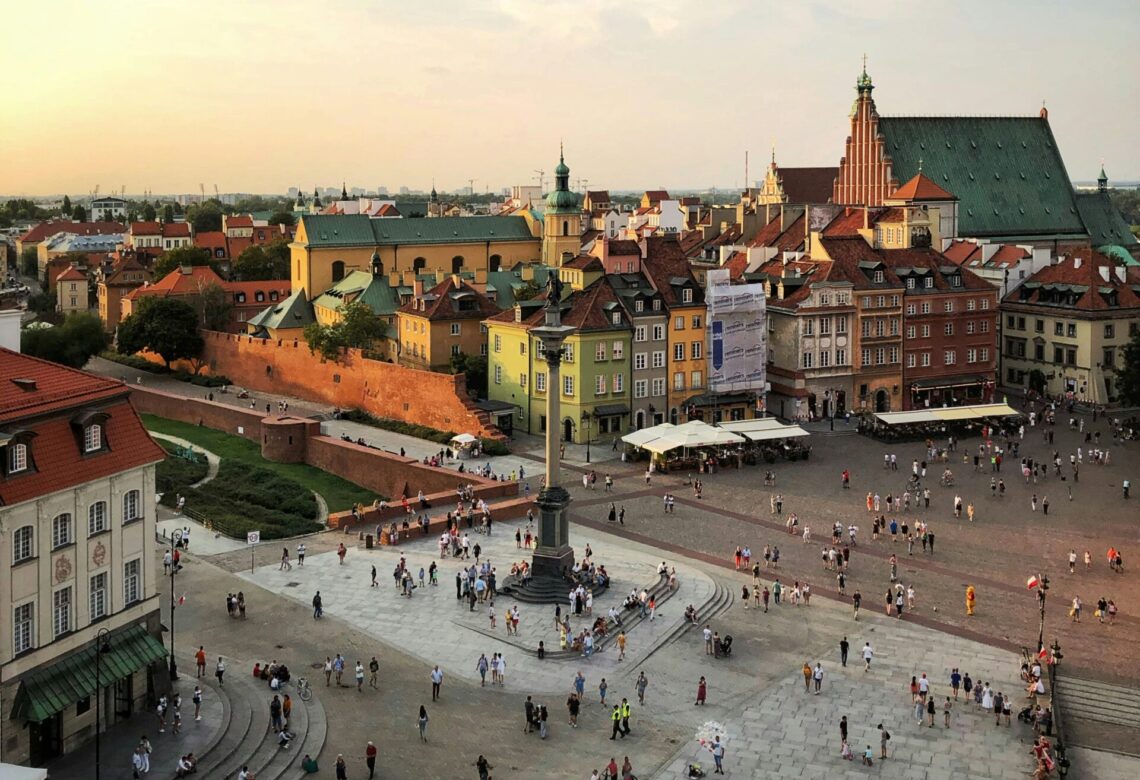
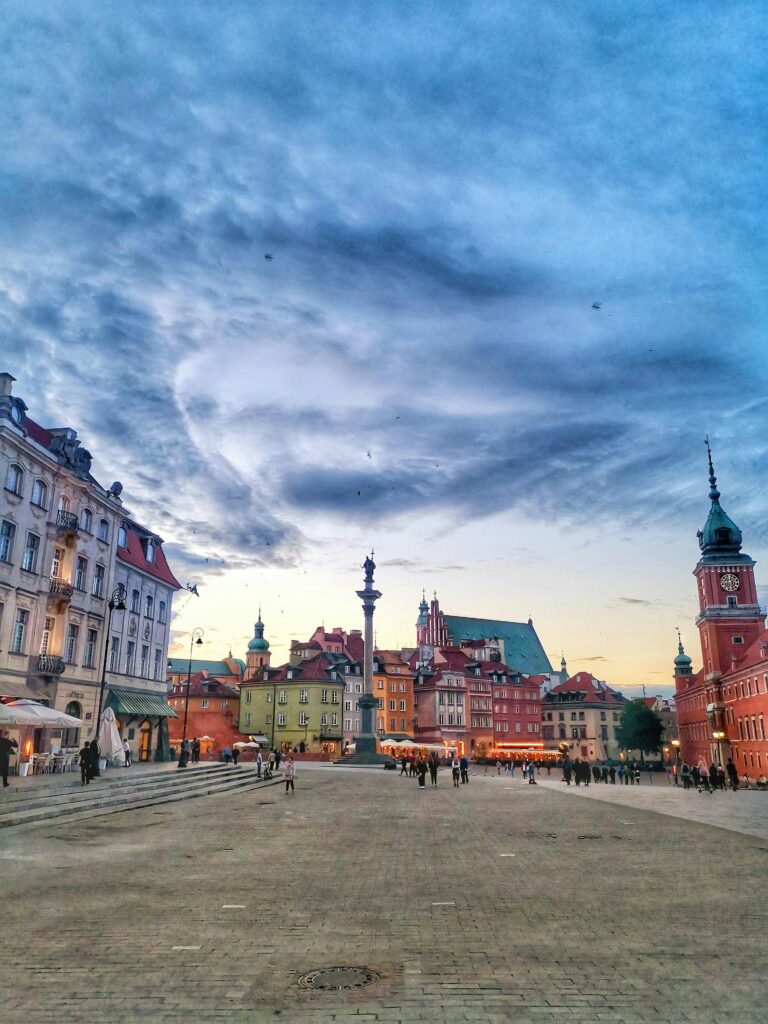
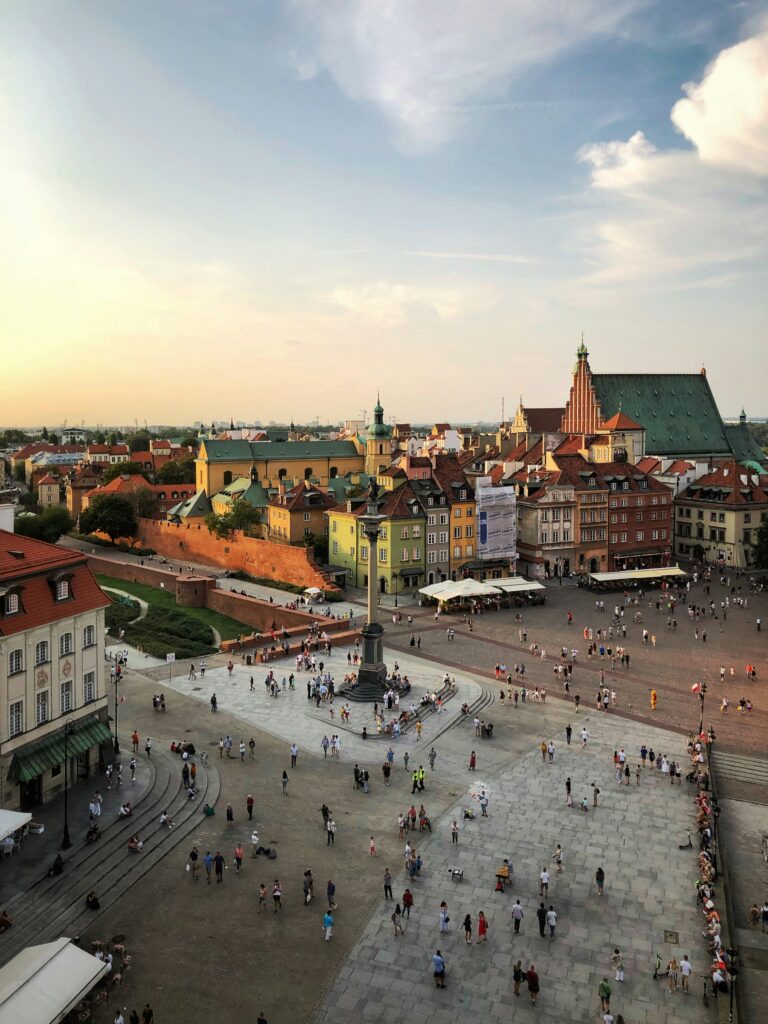
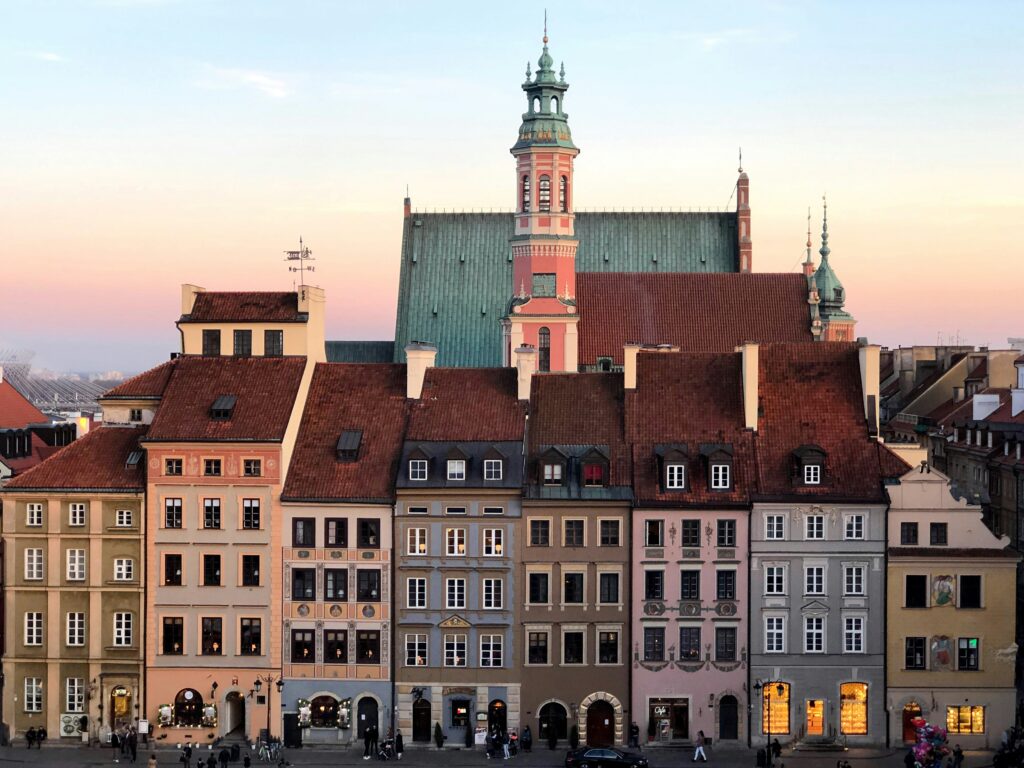
Start with the Old Town — even though what you see today is actually a reconstruction. Most of it was destroyed during World War II and later rebuilt so precisely that it’s now listed as a UNESCO World Heritage Site.
Right next to it, you’ll find the Royal Castle — also rebuilt after the war. Inside, you can visit royal apartments, historic halls, and art collections.
In front of the castle stands Sigismund’s Column, one of the most iconic landmarks in Warsaw.
The modern side of the city
If you want to feel a more contemporary vibe, walk along Nowy Świat and Krakowskie Przedmieście.
This is where you’ll find:
- cafés,
- restaurants,
- a more lively, local atmosphere.
Green spaces (and a slower moment)
If you need a break, head to:
- Łazienki Royal Park
- Wilanów Palace
Łazienki is especially worth visiting on a Sunday (May–September), when you can join a free Chopin piano concert in the park. It’s relaxed, local, and honestly — a bit like Central Park, but with classical music.
Palace of Culture & Science
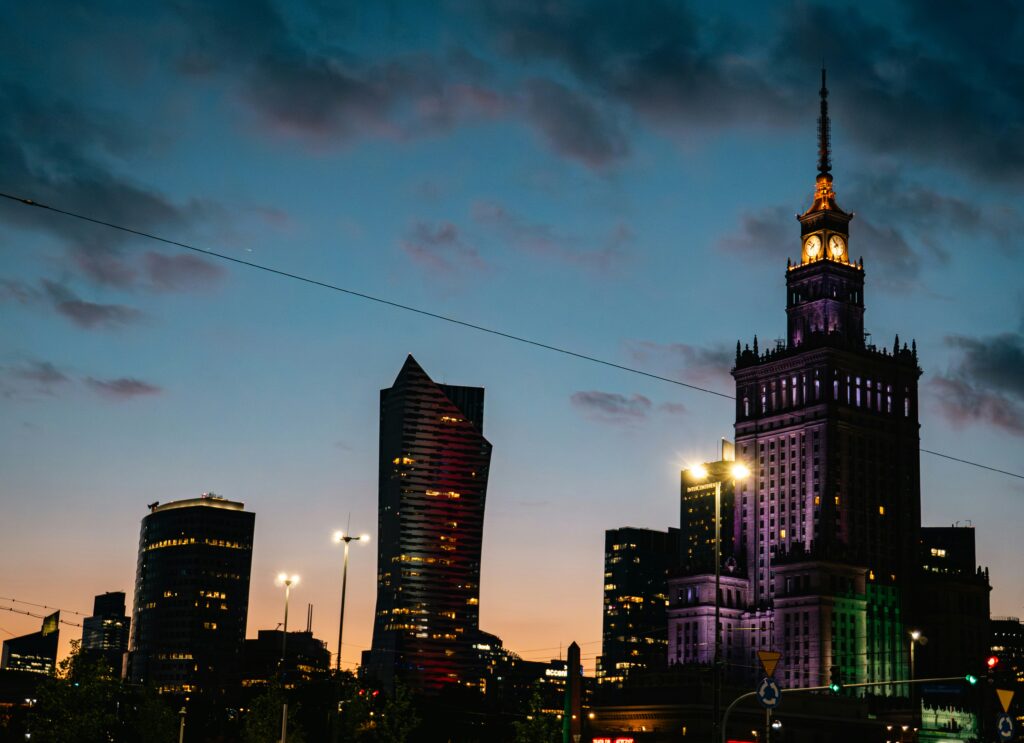
You can’t miss it — literally.
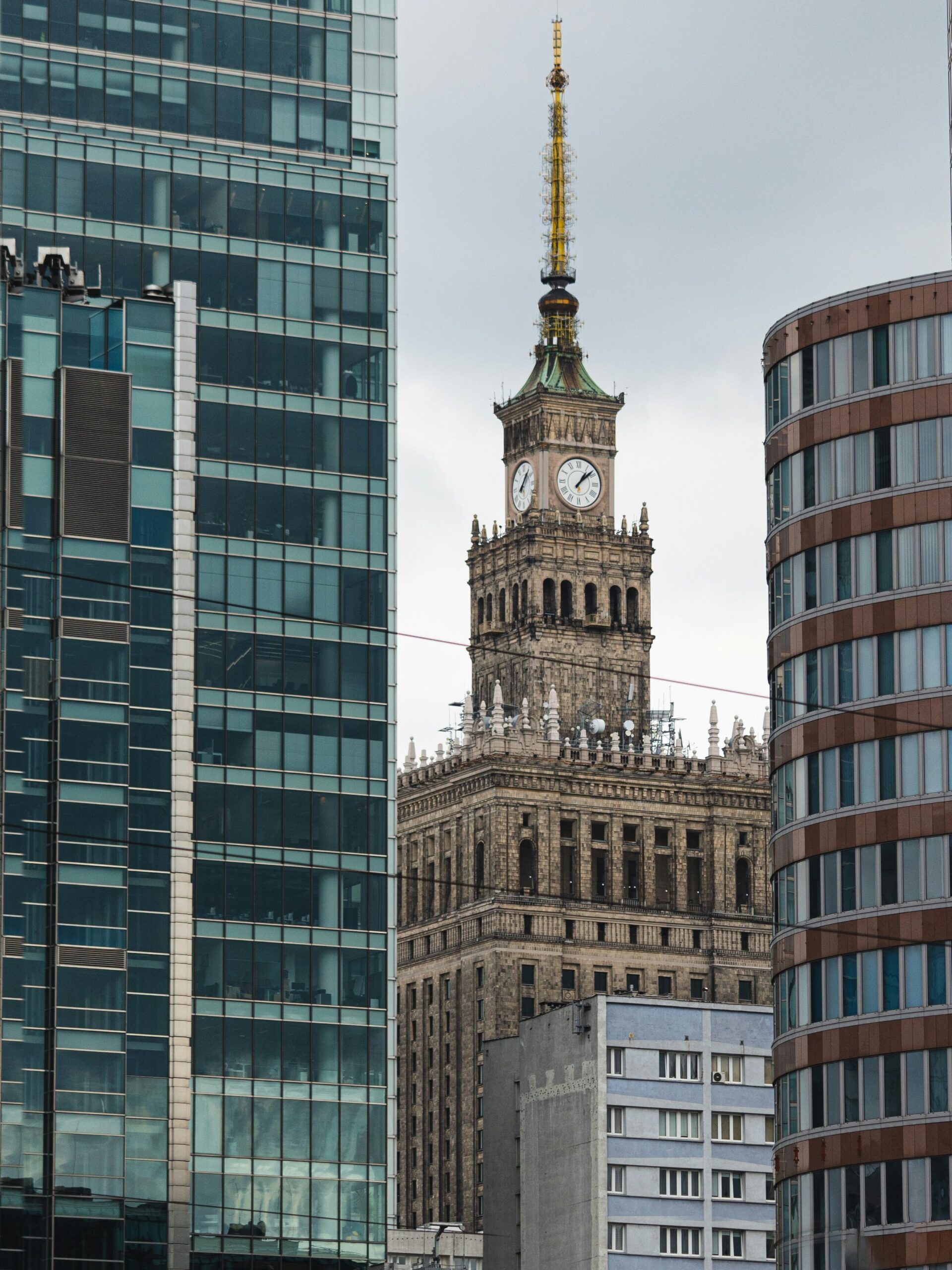
The Palace of Culture and Science is one of the most recognizable buildings in Warsaw. It was a “gift” from the Soviet Union, and people still have mixed feelings about it. Love it or hate it — it’s worth going up to the viewpoint for one of the best views of the city.
Museums worth your time
If you’re into museums, Warsaw has some excellent ones:
- Warsaw Uprising Museum
If you want to understand modern Poland — start here. (It’s powerful, so might not be ideal for very young kids.) - POLIN Museum of the History of Polish Jews
Not just about WWII — but about 1000 years of shared history. - Copernicus Science Centre
Great if you’re traveling with kids — but book tickets in advance. - Chopin Museum
Currently closed (renovation until late 2026)
Getting around Warsaw
Skip the car — seriously. Public transport in Warsaw is:
- cheap
- reliable
- easy to use
A 72-hour ticket is usually the best option for visitors and works on:
- buses
- trams
- metro
You can check routes using:
- Google Maps
- Jakdojade (very popular local app)
If you’re not sure how it works, we’ve explained it step by step here.
Krakow (3–4 days)
What to expect
Krakow feels very different from Warsaw. Life moves slower here. There’s less of that big-city energy and more of a relaxed, walkable, historic atmosphere.
And one thing to keep in mind — there will be more tourists than in Warsaw. So if you’re planning to visit popular attractions, it’s a good idea to book tickets in advance.
Main things to see in Krakow
Start with the Old Town
Just like in Warsaw, you start with the Old Town — but this time, it’s the real thing.
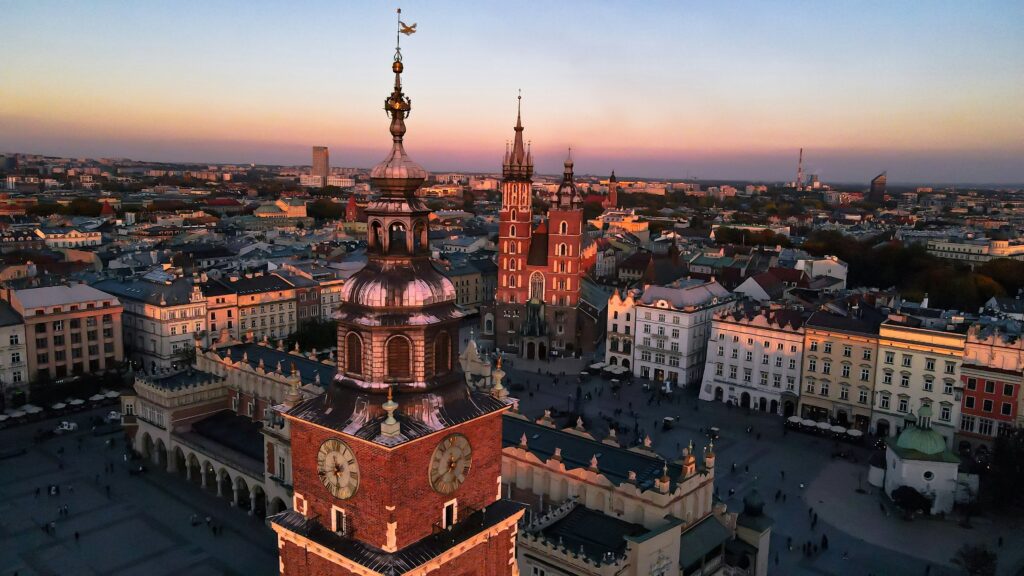
Krakow’s Old Town was added to the UNESCO World Heritage list in 1978 — as one of the very first sites in the world. And honestly, you’ll understand why the moment you step into it.
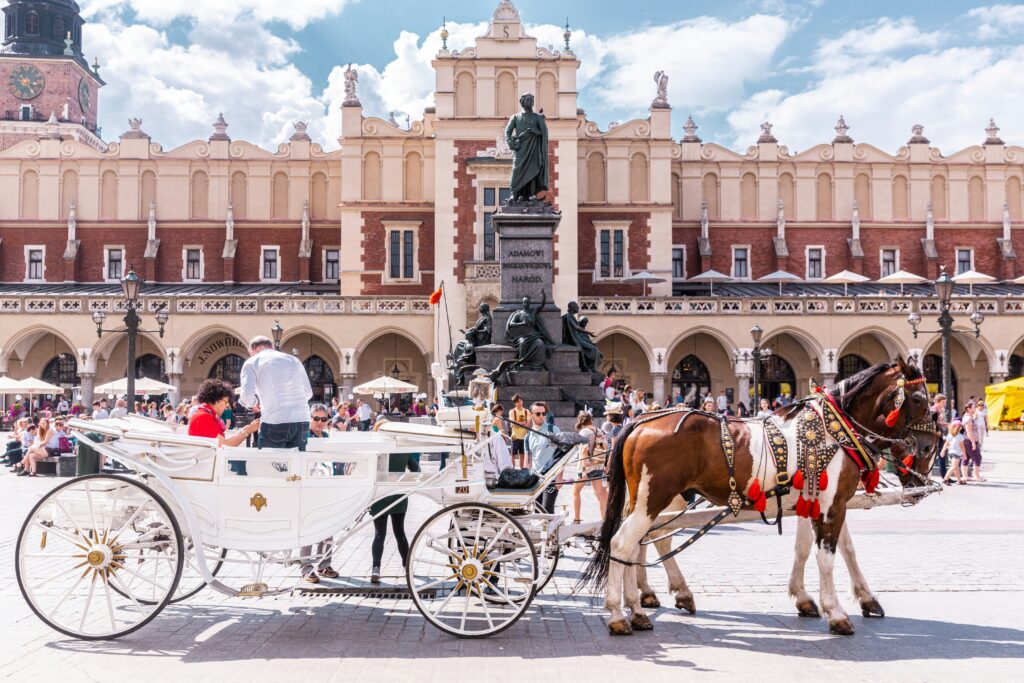
Start at the Main Market Square — one of the largest medieval squares in Europe. Here you’ll find:
- the Cloth Hall — in Polish: Sukiennice (a historic trading hall in the middle of the square)
- St. Mary’s Basilica (definitely worth going inside)
Every hour, you’ll hear a trumpet signal played from the tower of St’Mary’s — the famous hejnał. It stops suddenly in the middle of the melody. That’s intentional. According to legend, a trumpeter was warning the city about a Mongol invasion — and was shot mid-note. And yes… they’ve been replaying that moment every hour ever since.
Churches, streets & Planty Park
Krakow is one of those places where it’s worth stepping into random churches — even if you’re not into religious art, many interiors are genuinely impressive.
Wander through:
- small side streets,
- hidden courtyards,
- quiet corners just off the main routes.
And don’t skip:
- Florian Gate and the Barbican (in Polish: Barbakan)
- Planty Park
Planty surrounds the Old Town like a green ring. It was built where medieval walls once stood — and today it’s one of the nicest places. It’s perfect for slowing down and taking a break from sightseeing.
Wawel — one of the most important places in Poland
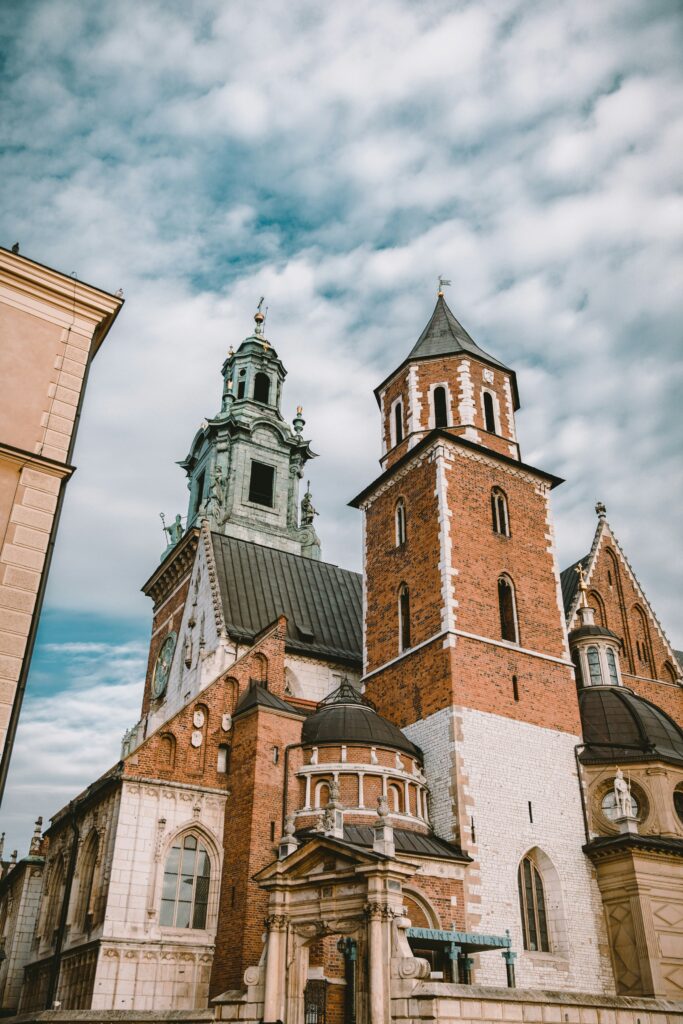
If you visit just one place in Krakow — make it Wawel. Not because it’s “on every list”. But because this is where Polish history becomes real. This hill above the Old Town has been the center of Polish history for many centuries.
At the top, you’ll find:
- the Royal Castle
- Wawel Cathedral
Inside the Cathedral are the tombs of Polish kings and national figures. It’s one of the most important historical and symbolic places in the country.
If Warsaw gives you a glimpse of modern history, Krakow — and especially Wawel — shows you everything that came before. And suddenly, things start connecting. If you want to understand Poland beyond just “pretty cities” — this is where it starts.
A bit of legend (and something lighter)
Right below Wawel, the mood shifts completely. You’ll find the Wawel Dragon.
According to legend, a dragon once lived in a cave under the hill. Today, there’s a statue that actually breathes fire — and yes, it’s a bit touristy… but also kind of fun.
You can walk along the river, visit the cave (seasonal), and just enjoy a more relaxed side of the city.
Kazimierz — food, history & atmosphere
If the Old Town feels polished and historic, Kazimierz feels more raw, real, and alive. This used to be the Jewish district of Krakow, with a long and complex history — especially during World War II.
For many years, it was neglected. Today, it’s one of the most interesting parts of the city.
You’ll find:
- synagogues and historical sites
- cafés, bars, and restaurants
- street food and local spots
This is where you go when you’re done “sightseeing” and just want to experience the city. And yes — this is also where you’ll find the famous Polish zapiekanka (one of those simple things you didn’t plan to try… and end up loving).
How to approach Krakow
Three days here is more than enough — as long as you don’t try to turn it into a checklist. Krakow is not about rushing from one attraction to another.
It’s about walking, sitting down for coffee, getting lost in small streets — and letting the city happen to you.
Day Trips from Krakow
If you’re based in Krakow, there are two day trips that are absolutely worth your time. Very different from each other — but both important in their own way.
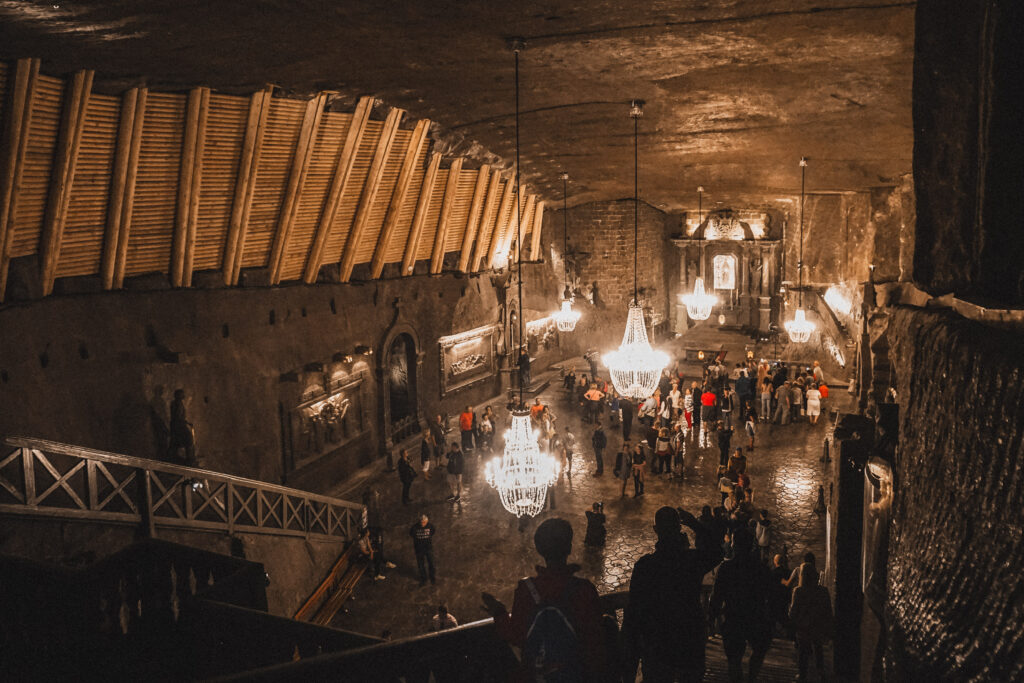
Wieliczka Salt Mine — much more than “just a mine”
First: Wieliczka Salt Mine. And if you’re thinking: “I’ve seen mines before” — no, you haven’t seen anything like this.
Wieliczka (also listed as a UNESCO World Heritage Site in 1978) is basically an underground world. You don’t just walk through tunnels. You explore:
- underground lakes
- huge chambers
- a full chapel carved entirely in salt
- kilometers of corridors
And here’s the crazy part: what you see is only about 2% of the entire mine. The place is massive. There are different routes available, and it’s definitely worth booking tickets in advance — especially in high season.
Location: about 15 km from Krakow. You have two options:
- organized tour (easier but more expensive)
- or DIY — local train (KML — Koleje Małopolskie), just 15 minutes from Krakow and much cheaper
If you prefer convenience — go with a tour. If you like doing things your own way — train is super easy. You can check available tours and fast-track tickets here
If you’re traveling with kids, this is a must. For many families, it ends up being one of the highlights of the entire trip to Poland.
Auschwitz — difficult, but important
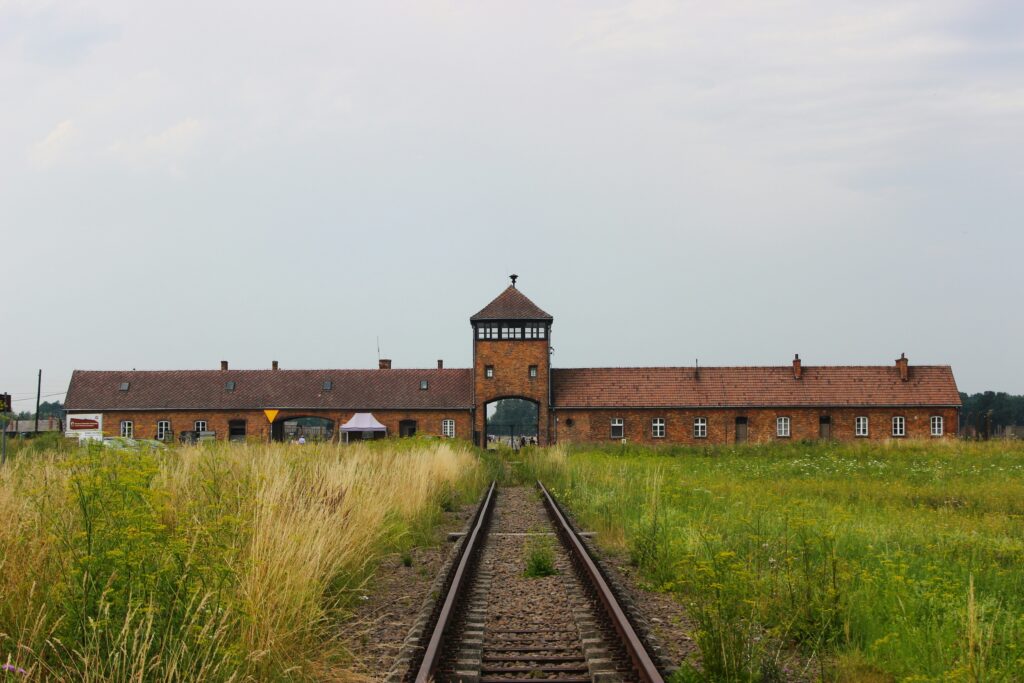
The second place is completely different. About 1.5 hours from Kraków, you’ll find Auschwitz-Birkenau — the former Nazi concentration and extermination camp.
This is not a typical “attraction”. It’s a place that changes the tone of your trip.
After seeing Warsaw and Krakow, this visit helps you understand something deeper — not just Polish history, but the scale of what happened in Europe during World War II.
Walking through the site is a quiet, heavy experience. There’s no need for exaggeration — the place speaks for itself.
Most visitors choose a guided tour to fully understand what they’re seeing and to organize the visit more easily — you can check available options here.
This is not recommended for young children. Even for adults, it can be emotionally intense. But if you want to truly understand the region — this is one of the most important places you can visit.
How to approach these trips
These two places show completely different sides of Poland:
- Wieliczka → impressive, surprising, almost surreal
- Auschwitz → difficult, but meaningful
You don’t have to do both — but if you have the time, they add a lot of depth to your trip.
Where to stay
For this itinerary, it’s best to stay in central areas — especially in Warsaw and Krakow — so you can explore most places on foot without wasting time on transport.
In Warsaw, look for accommodation around Śródmieście. That’s where you’ll be close to the main attractions, restaurants, and public transport. You can check available places in Warsaw here.
In Krakow, staying near the Old Town or Kazimierz will give you the best experience — everything is within walking distance, and the atmosphere in the evenings is completely different than in other parts of the city. Browse current options in Krakow here.
The good news is — you don’t need luxury hotels to stay somewhere nice. Poland offers really solid standards even at mid-range prices.
Tip: book in advance — the best-located places sell out quickly, especially during peak season.
Getting between cities — easier than you think
Traveling between cities in Poland is surprisingly easy — and you don’t need a car to do it. Trains are fast, comfortable, and connect all major cities like Warsaw and Krakow in just a few hours.
If you want a simple step-by-step explanation, we’ve written more about it here: How to Use Trains in Poland.
You can also use buses, but for most travelers, trains are the best option.
As for renting a car — in most cases, it’s simply not necessary. Public transport works really well, and driving in city centers can actually make things more complicated. We break that down in detail here: Do You Need a Car in Poland.
Final Thoughts
Traveling this way saves you a lot of unnecessary stress. Instead of rushing from place to place, you actually start to understand what you’re seeing. Because in Poland, history is not just “something in the background” — it’s a big part of how the country feels today.
You move from medieval kings in Krakow, through the difficult history of World War II in Auschwitz and Warsaw, all the way to the modern, fast-changing capital. And somewhere in between, you experience the everyday side of Poland — the food, the atmosphere, the small moments that aren’t on any “must-see” list.
You’ll see incredible places, take photos you’ll actually want to keep, and visit something as unique as the Wieliczka Salt Mine — which, honestly, might end up being the highlight of the trip (especially for kids).
But don’t get it wrong. This itinerary isn’t about seeing everything. It’s about experiencing Poland without stress. And once you get a taste of it — the people, the food, the energy — there’s a very good chance you’ll want to come back.
So maybe don’t wait too long.
FAQ — Planning Your First Trip to Poland
Is 7 days enough to visit Poland?
It’s enough for a great first impression — but not to see everything. That’s why this itinerary focuses on just two cities instead of trying to cover the whole country.
Is it better to start in Warsaw or Krakow?
Warsaw is the main entry point with more flight options, so it’s usually easier to start there and continue to Krakow.
Do I need a car for this itinerary?
No. Trains and public transport are more than enough, and in many cases, easier than driving.
Is this itinerary good for families with kids?
Yes — especially if you balance sightseeing with slower moments. Wieliczka Salt Mine is often a highlight for kids.

You May Also Like